
ITSM • Operations • Business Applications
LogIt
IT service management without the spreadsheet chaos.
Overview
LogIt is an IT service management platform built to give organisations a single place to raise, route, resolve and review IT work. It replaces informal request channels and spreadsheet trackers with a structured service desk, incident handling and operational reporting.
The Challenge
IT work was difficult to see end to end. Requests arrived through mixed channels, incidents were hard to distinguish from routine work, and leadership had limited visibility of volume, accountability and service performance. Spreadsheets could record tickets; they could not run a service function.
The Approach
The product was designed around how IT work actually moves: request, classify, assign, resolve, review. Identity, roles and operational reporting were treated as core—not extras. The platform separates the concerns of employees raising work, agents handling queues, and administrators governing the service.
The Solution
LogIt provides ticketing, incident management, request management and reporting in one operational system. Service accountability is visible through queues, status, assignment and reporting. The platform is built for self-hosted operation, with a dedicated API, web application and supporting infrastructure.
Key Capabilities
- IT service management
- Ticketing
- Incident management
- Request management
- Operational visibility
- IT reporting
- Service accountability
Technology

Architecture / workflow
Requester
Service desk
Incident handling
Reporting
Governance
The operating model is the product: request, classify, resolve, review.
Screenshots
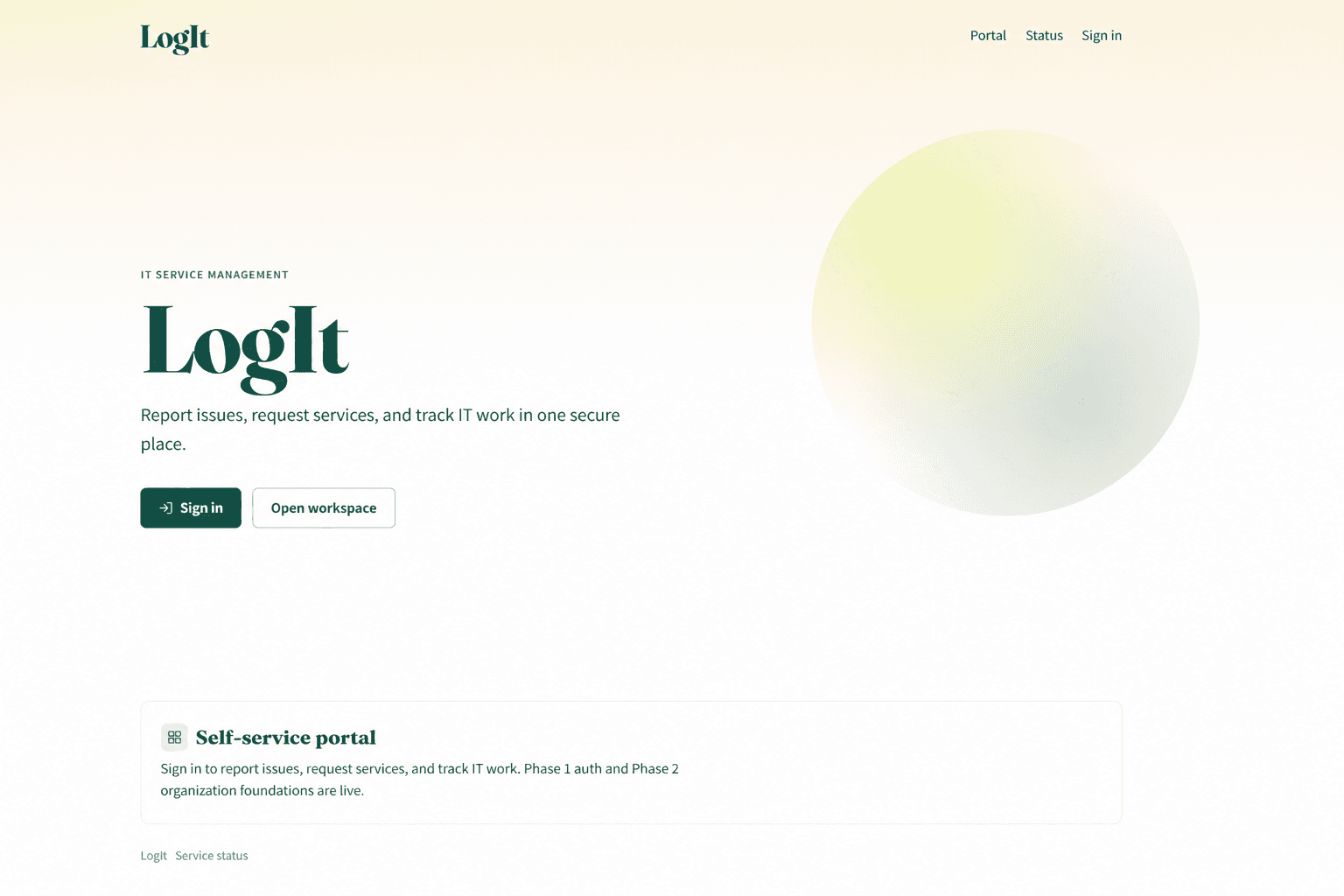
LogIt · Landing
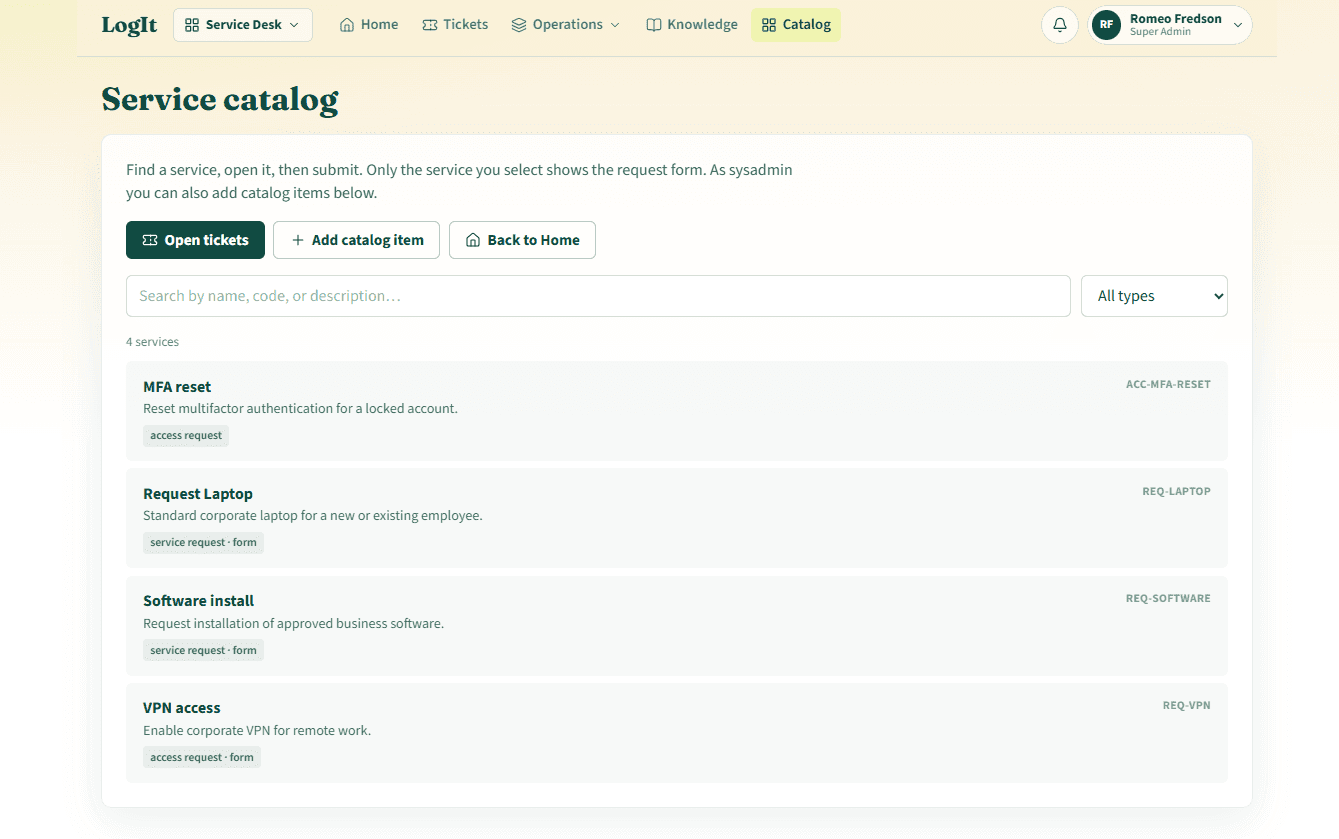
LogIt · Service catalog
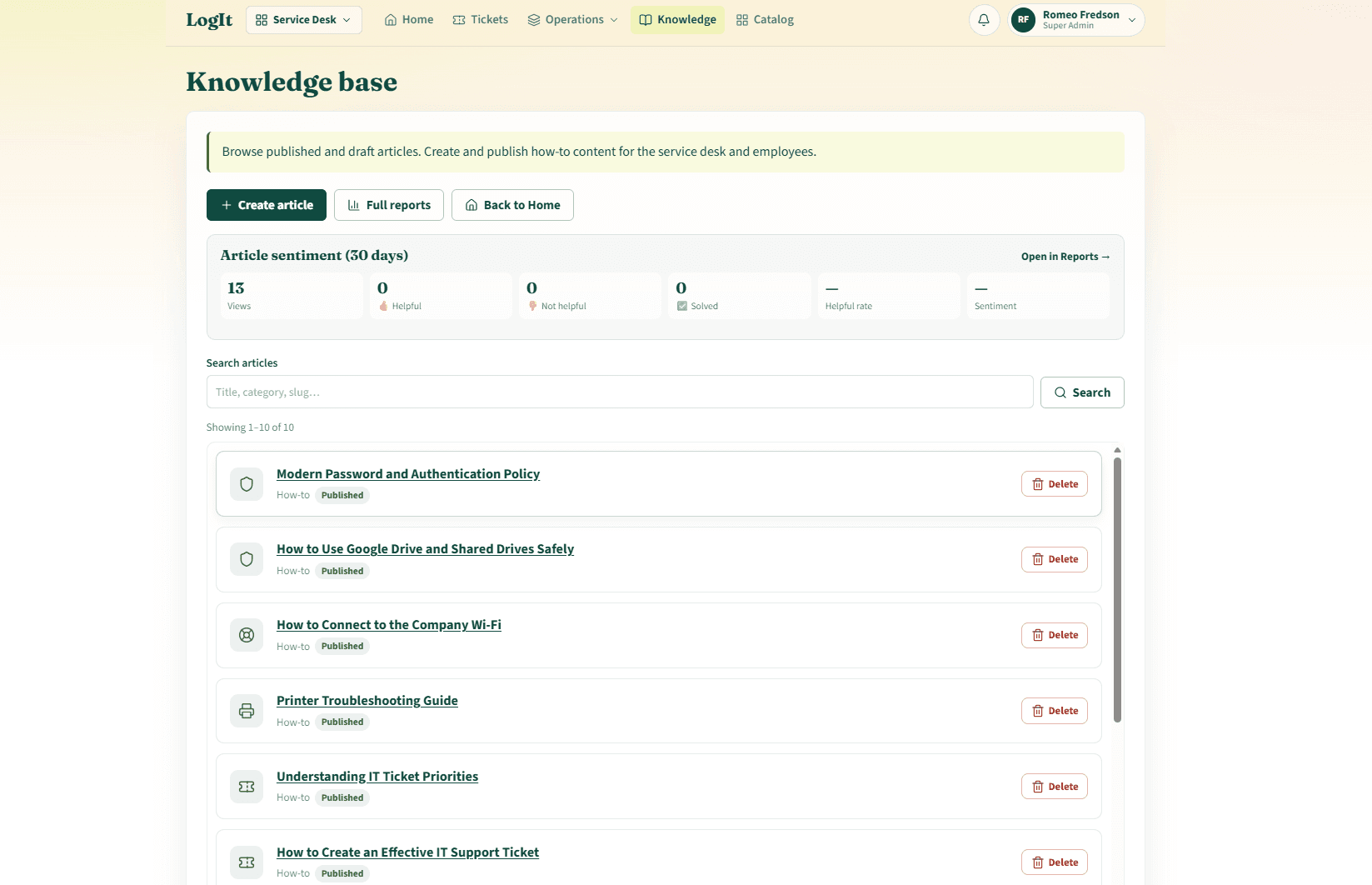
LogIt · Knowledge base
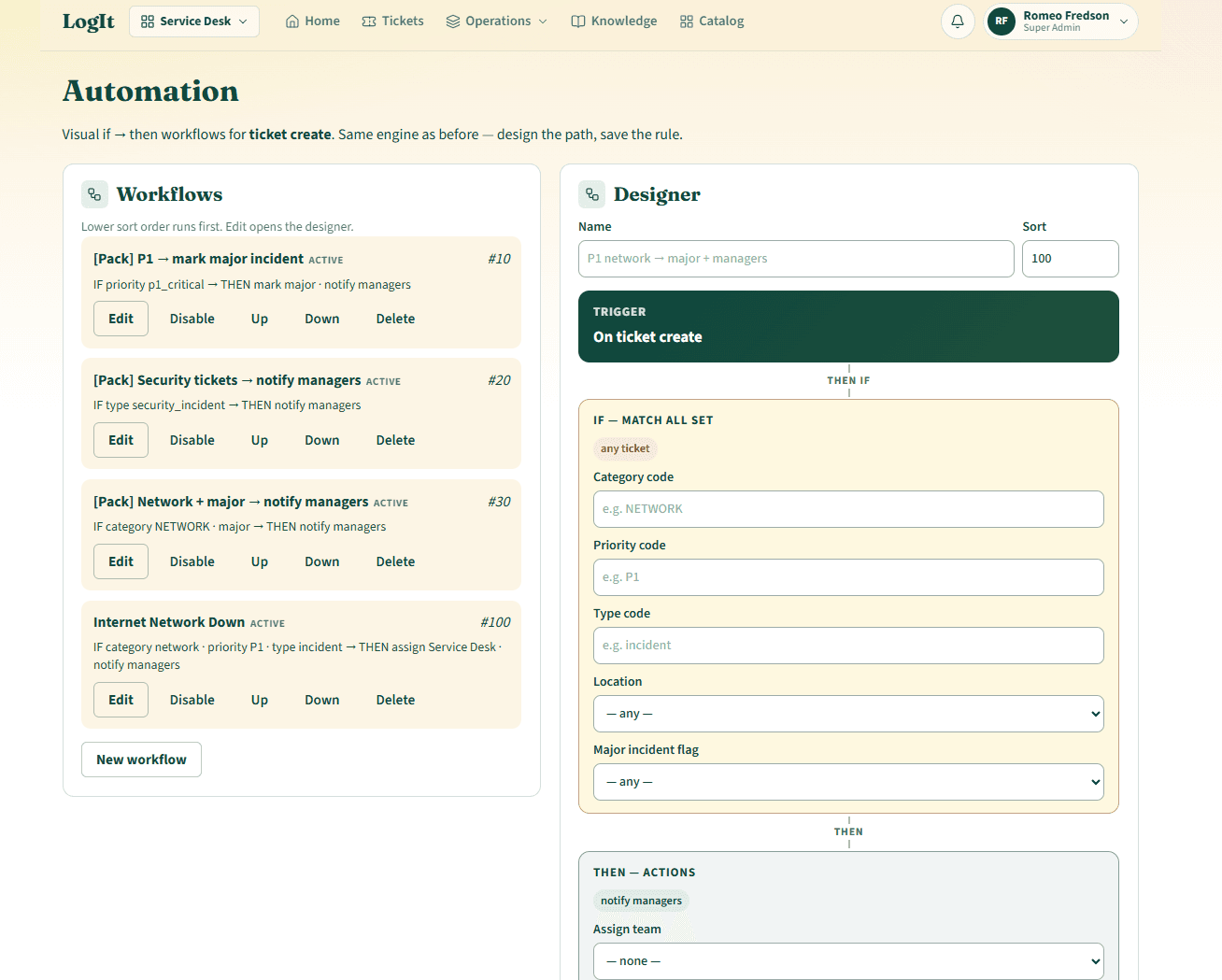
LogIt · Automation
LogIt · Routing & SLA
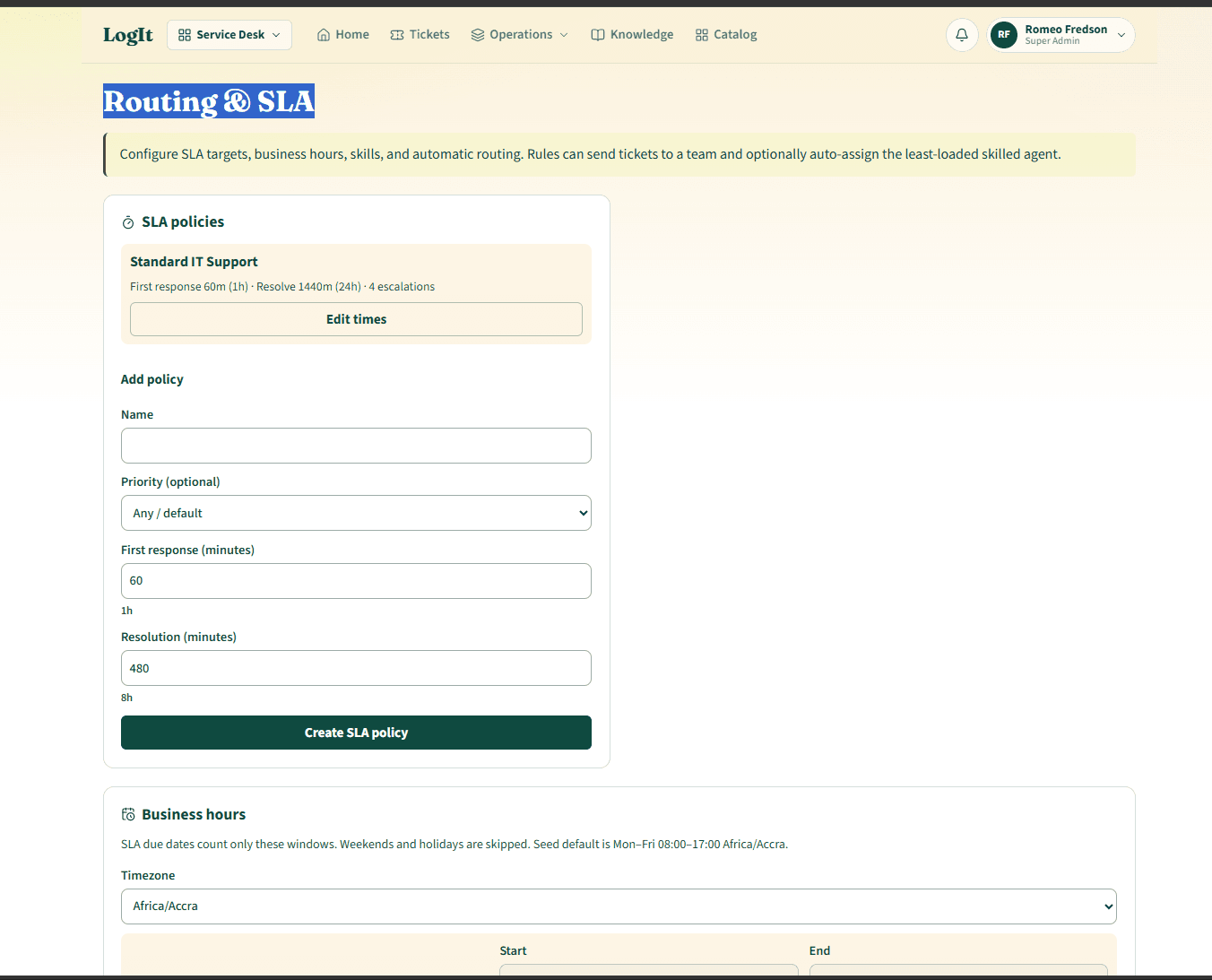
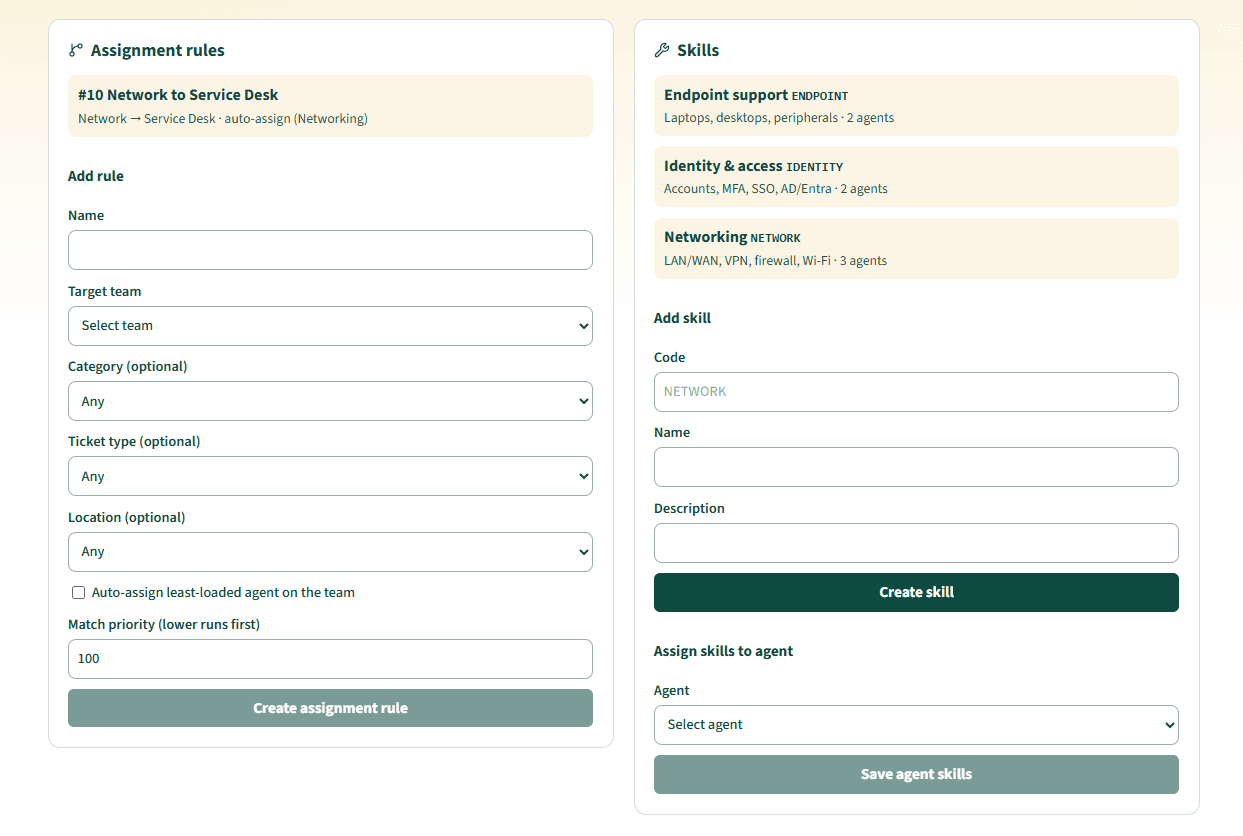
LogIt · Assignment rules
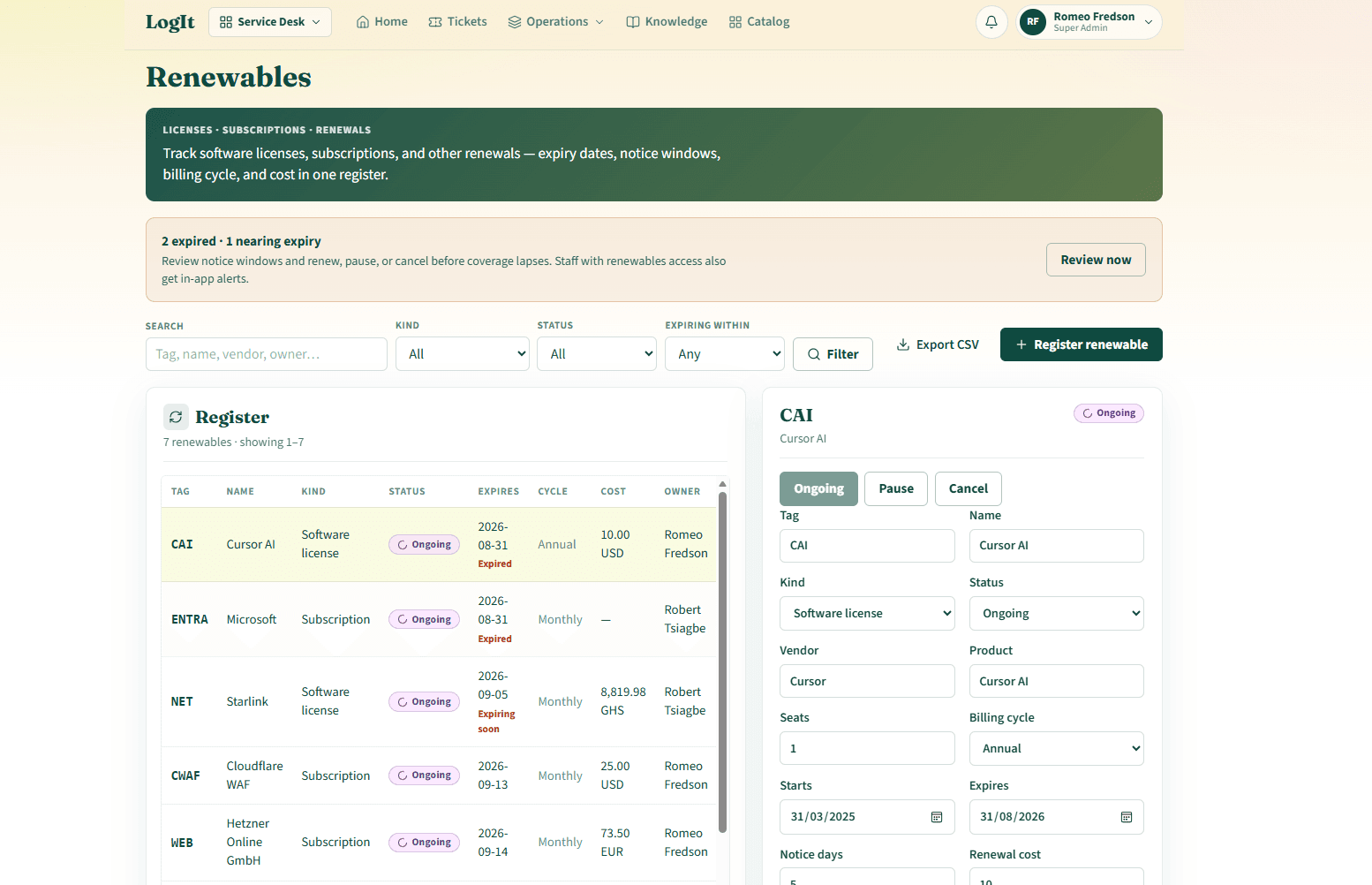
LogIt · Renewables
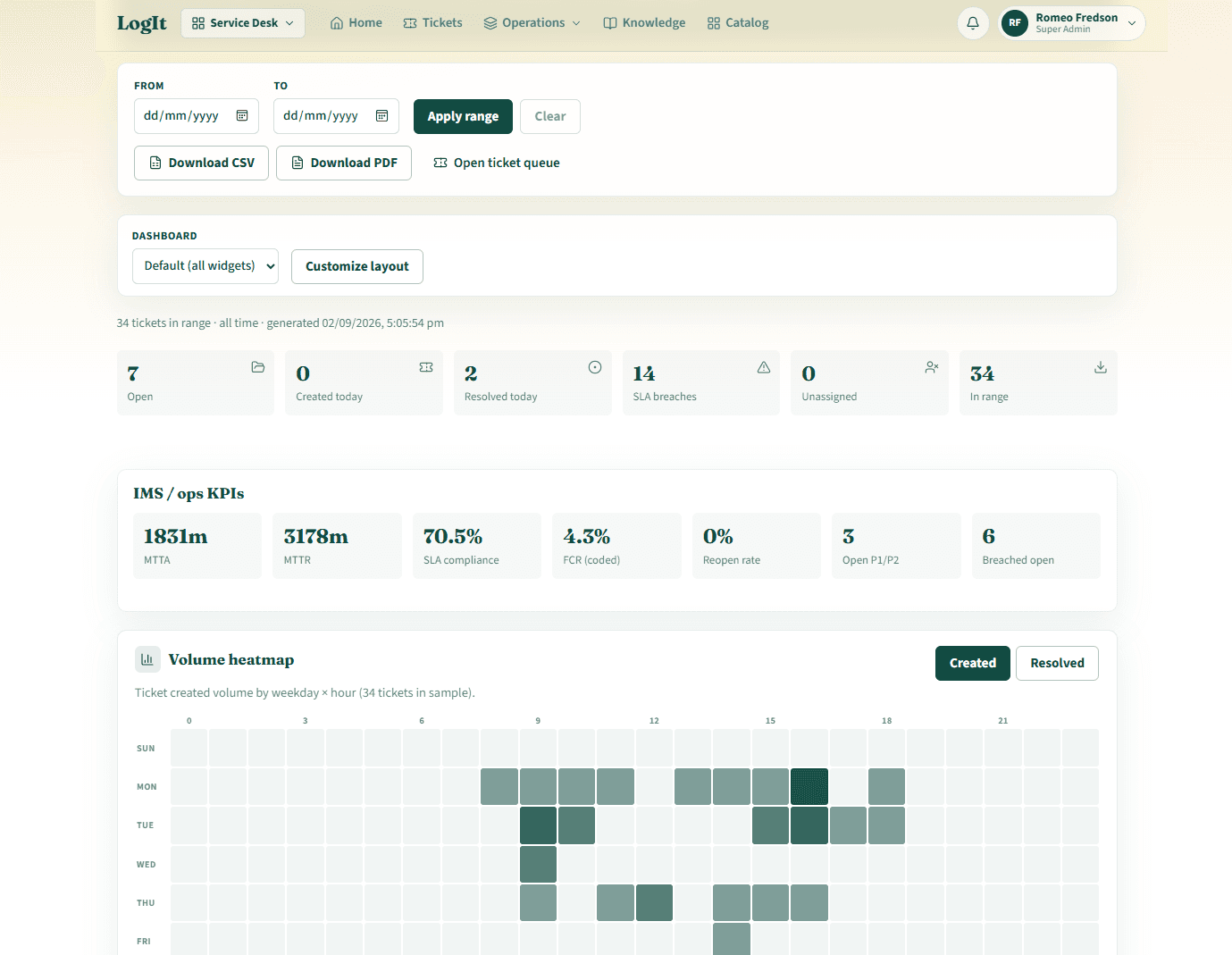
LogIt · Reports
Impact / Outcomes
IT work becomes a managed service rather than a collection of inboxes. Requests, incidents and operational reporting sit in one system with clear ownership.
Lessons
Service platforms fail when they are designed as ticket databases. They work when they encode the operating model—who can ask, who must act, and how the organisation sees the result.
No public URL for this project.
Next step
Discuss a similar problem.
If this work is close to a challenge you are facing, we can start with the process, the data and the decision—not with a tool.